

Pancreatic duct stones and strictures
Pancreatic duct stones and strictures
overview
SGC specialist utilize advanced, minimally invasive techniques—particularly endoscopic retrograde cholangiopancreatography (ERCP) and endoscopic ultrasound (EUS)—to diagnose and treat pancreatic duct stones and strictures.
These procedures, often linked to chronic pancreatitis, involve stone removal, duct dilation, and stent placement to relieve obstruction, pain, and prevent further damage.
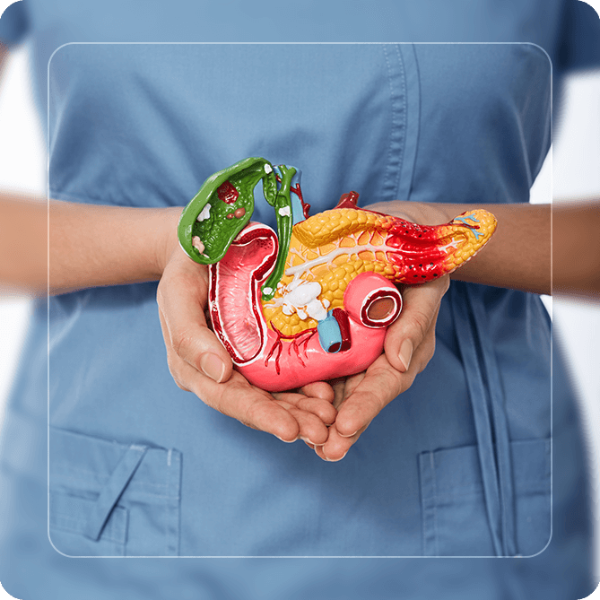
Diagnosis and Evaluation
- Imaging: CT scans and MRIs are used to visualize stones and inflammation.
- Endoscopic Ultrasound (EUS): A highly specialized, minimally invasive technique to visualize blockages and stones in the pancreatic duct.
- Endoscopic Retrograde Cholangiopancreatography (ERCP): Allows direct visualization of the ducts using X-ray and endoscopy to locate strictures and stones.
Treatment Approaches
Dr Saurabh Agarwal focuses on minimizing invasiveness to manage pancreatic duct issues:
- Stone Removal: ERCP is used to break up and remove stones.
- Stricture Dilation: Endoscopic techniques are used to widen narrowed duct areas.
- Stenting: Placing stents to keep the duct open, manage leaks, or allow bile/pancreatic juice to flow.
- Multidisciplinary Approach: Specialized teams, including all specialists manage patients with chronic pancreatitis and associated complications.
Symptoms Managed
- Severe upper abdominal pain.
- Jaundice (yellowing of skin/eyes) if bile ducts are affected.
- Nausea, vomiting, and diarrhea.