

LIVER BIOPSY
LIVER BIOPSY
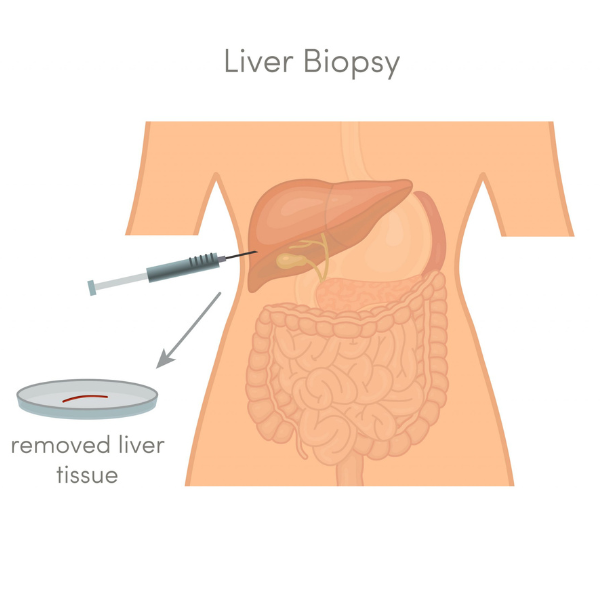
A liver biopsy is a procedure to remove a small piece of liver tissue, so it can be examined in a lab under a microscope for signs of damage or disease. You may be recommended a liver biopsy if blood tests or imaging studies suggest liver problem. A liver biopsy also is used to find out the state of someone's liver disease. This information helps guide treatment decisions.
The most common type of liver biopsy is called percutaneous liver biopsy. It involves inserting a thin needle through the belly into the liver and removing a small piece of tissue.
Why and when is it done:
- Look for the cause of a liver problem that can't be found with a healthcare professional's exam, blood tests or imaging studies.
- Get a sample of tissue from an irregularity found by an imaging study.
- Find out how bad liver disease is, a process called staging.
- Help create treatment plans based on the liver's condition.
- Find out how well treatment for liver disease is working.
- Check on the liver after a liver transplant.
Liver Diagnostic Procedures
Non-Invasive Tests
- Blood Tests: Liver function tests (LFT), viral markers
- Ultrasound Abdomen: First-line imaging
- FibroScan (Transient Elastography): Measures liver stiffness (fibrosis)
- CT Scan / MRI Liver: Detailed imaging for tumors and complications
A liver biopsy also is most often done to help diagnose and stage certain liver diseases, including:
- Nonalcoholic fatty liver disease.
- Chronic hepatitis B or C.
- Autoimmune hepatitis.
- Liver cirrhosis.
- Primary biliary cholangitis.
- Primary sclerosing cholangitis.
- Hemochromatosis.
- Wilson's disease.