

Foreign Body Removal
Foreign Body Removal
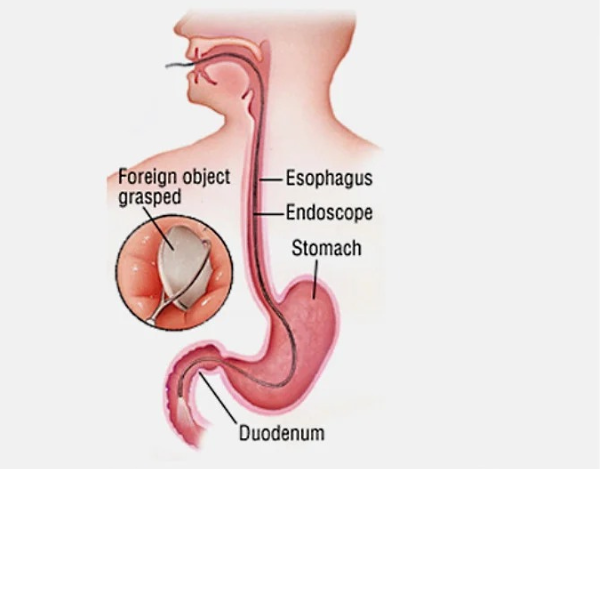
Foreign body removal refers to the endoscopic extraction of accidentally swallowed or stuck objects in the esophagus, stomach, or intestines. At Surat Gastro Centre, Dr. Saurabh Agarwal specializes in safe, non-surgical removal of foreign bodies using advanced endoscopic tools.
Emergent intervention is prioritized for sharp objects, batteries, or complete obstructions to prevent perforation.
When Is It Needed?
Foreign body ingestion can happen in:
- Children (coins, toys, batteries)
- Adults (fish bones, dentures, food boluses)
- Patients with psychiatric disorders or trauma
- Emergency Indicators: Sharp objects (4% perforation risk), button batteries (rapid tissue damage), and items causing complete esophageal obstruction require immediate removal.
Symptoms of a Foreign Body in GI Tract
- Difficulty swallowing
- Chest or throat pain
- Vomiting or nausea
- Drooling or choking
- Abdominal pain or discomfort
- Patients are advised to seek immediate medical attention if they experience severe symptoms such as abdominal pain, fever, or vomiting.
Procedure Overview
- Performed using Upper GI Endoscopy (EGD) or Colonoscopy
- A thin, flexible scope with a camera is inserted to locate the object
- Specialized tools like grasping forceps, polypectomy snares, Dormia baskets, and retrieval nets are used to remove it
- Done under local anesthesia or sedation.
Key Clinical Benefits
- The primary advantage is avoiding major surgery, which significantly improves patient outcomes.
- Minimally Invasive: No external incisions are required in most cases, as the scope enters through natural openings like the mouth (endoscopy) or anus (colonoscopy).
- High Success Rate: Success rates for retrieving foreign bodies typically exceed 95% when performed by skilled specialists.
- Real-Time Visualization: High-definition cameras allow doctors to directly see the object and assess any damage it may have caused to the GI lining (e.g., ulcers, tears, or bleeding).
- Reduced Complications: Compared to surgery, these methods carry a lower risk of infection, heavy bleeding, and long-term scarring.
- Diagnostic & Therapeutic: In a single session, the doctor can both find the object and remove it.